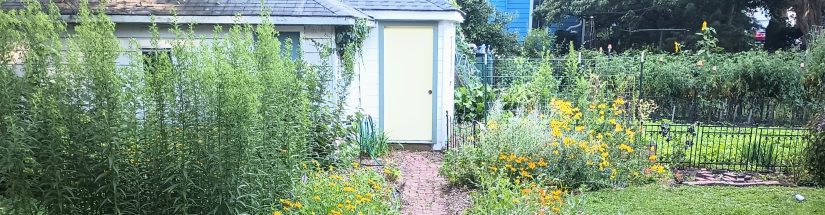
Early in the spring, I always crave fresh leafy greens and regret how few of them can be found in the Midwest. A few farmers in our area grow greens during the winter in heated high tunnels, but they always seem to sell out at the market almost immediately until June!
I don’t have a high tunnel, but I thought I’d see how early I could grow greens outside in my garden. This winter, I rediscovered a trick my grandparents used to employ with their cool season greens: frost-seeding. I remember that my Grandad used to sow spinach in the snow, & decided to give it a try myself. I couldn’t find any extension resources for frost-seeding leafy greens, so I adapted some guidance I found for frost-seeded cover crops.
My “experiment” (Disclaimer: unreplicated, merely anecdotal data ahead!)
I tried three types of cold-hardy greens & chose varieties that were recommended for winter production: turnip greens (purple top white globe), arugula (standard), and spinach (Kolibri). I planted the seeds during the first week of February, once I was confident there were no more subzero nights (in Fahrenheit) in the forecast. When I put my garden to bed last fall, I mulched it with leaves from my yard– so I just raked them out of the way for a clean seedbed.
I wanted to grow my greens like cover crops so they would smother all the weeds, so I chose a heavy cover-crop seeding rate for the turnip & arugula (1-2 tablespoons per 100 sqft, haphazardly flung). I spent a little more on seeds by planting them at a much higher density than what they recommend on the packet, but it pays off abundantly in extra produce and freedom from the agony of weeding between rows.
The beauty of frost-seeding is that the freeze-thaw cycles work the seeds into the soil without any tillage at all. Let the frosty weather do the hard work for you! Another advantage of frost-seeding is that your crop completely matures while the weather is still relatively wet and cool, so there is almost no need for watering. I decided not to do any thinning either, and don’t regret it one bit! I literally threw some seeds on bare soil, wished them luck, and offered them no further care.
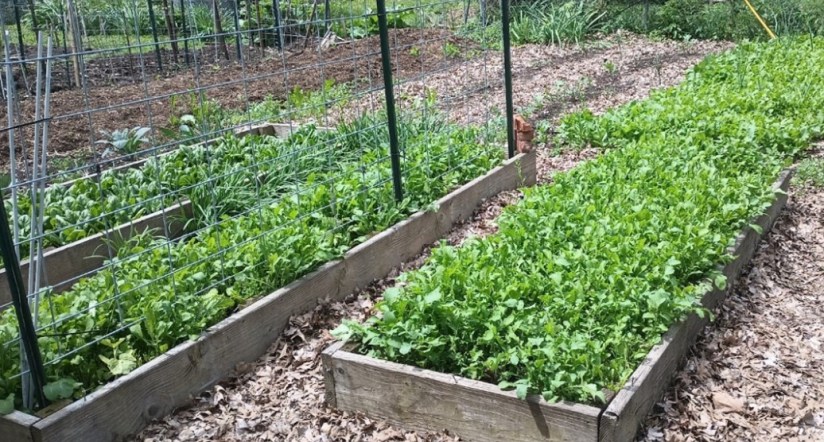
By the first week of April, I was delighted by my first harvest of turnip greens and arugula! The spinach took a couple more weeks to fill in, but my frost-seeded plants were ready just as soon as the spinach transplants that I bought from the farmers market.
The turnip greens were my favorite prize from my little experiment with frost-seeding– At the end of May, my spinach and arugula are threatening to bolt, but those turnip greens are still going strong. And they are particularly delicious and tender when I cook them with a little butter, lemon and salt. After several years living in the South, turnip greens are my favorite of all the cooking greens, and I often eat them with a fried egg on top for a ridiculously easy, humble, meal. If you’re looking for a productive crop with huge returns on almost no effort, try frost-seeding your greens next year. I used to wait until March or April to plant my greens in little rows, but frost-seeding the entire bed was so much easier, and SO much more productive. My Grandad clearly knew what he was doing! I can’t wait to try frost-seeding kale, pea shoots, and lettuce next year—I might even add some row cover to give them a bigger head start!


 Trophic ecology of regenerative agroecosystems